Knowing how to tell if a watermelon is ripe can save you from the disappointment of cutting open a pale, watery or tasteless melon. The most reliable signs are a creamy yellow field spot on the underside, a deep hollow sound when you tap it, a heavy weight for its size, and a dull (not shiny) rind. A watermelon does not get sweeter after it is picked, so choosing a good one at the store is the only chance you get.
In this guide you will learn seven simple tricks to pick a sweet, juicy watermelon, which popular tips are just myths, and how to store your melon once you take it home.
Why Does Choosing a Ripe Watermelon Matter?
Watermelon is a fruit that stops ripening once it is cut from the vine. Unlike bananas or avocados, it will not become sweeter on your kitchen counter. An underripe melon stays pale, crunchy and bland, while an overripe one turns mushy and grainy. That is why checking several signs together gives you the best result.
1. Check the Field Spot
The field spot (also called the ground spot) is the patch on the underside where the melon rested on the ground while growing. Turn the watermelon over and look at it:
- Creamy yellow or light orange: a good sign, the melon had time to ripen on the vine.
- White or very pale green: the melon was probably picked too early.
This is one of the most dependable tricks, so always check it first.
2. Lift It and Feel the Weight
A ripe watermelon feels heavy for its size because it is full of water. Pick up two melons of similar size and choose the heavier one. If a melon feels light, it may be dry inside or not fully developed.
3. Tap It and Listen for a Hollow Sound
Knock on the side of the melon with your knuckles or the palm of your hand. A ripe watermelon usually makes a deep, hollow sound, a little like knocking on a door. A dull, flat thud can mean the flesh is overripe or too dense. This trick takes practice, so use it together with the other signs rather than on its own.
4. Look for a Dull, Not Shiny, Rind
A very shiny watermelon is often underripe. As the melon matures, the skin loses its glossy look and turns a little dull. The stripes or dark green color should look firm and even.
5. Check the Shape and Skin
Choose a melon with a symmetrical, even shape, either round or oval. Odd bumps or flat sides can show uneven growth or watering problems. The rind should be firm. Avoid melons with soft spots, deep cuts, cracks or large dents, since these can let bacteria and mold in.
6. Look at the Stem and Webbing
If the melon still has a stem, a dry, brownish stem is a good sign, while a bright green one can mean it was picked early. Many shoppers also like to see rough brown, web-like marks on the skin. These marks are often called sugar spots, and some growers say they point to a sweeter melon. This is a popular rule of thumb rather than a guarantee, so treat it as a bonus sign.
7. Buy a Cut Piece and Check the Flesh
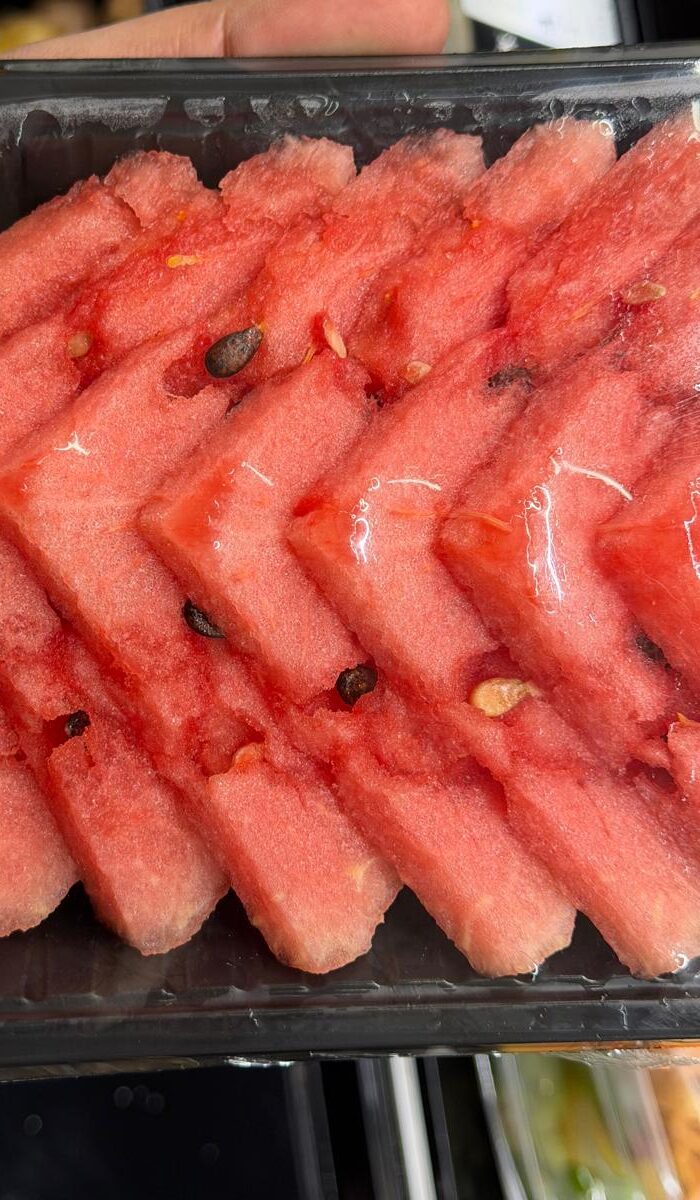
If you are buying a half or a slice, you can check the inside. Look for deep red, evenly colored flesh with dark brown or black seeds. Pale flesh, white streaks or a mushy, grainy texture mean the melon is not at its best.
Common Watermelon Myths
- Boy and girl melons. The idea that one shape is sweeter has no scientific support. Watermelons do not have a gender in this sense, so ignore this tip.
- Bigger is better. Size alone does not show ripeness. Weight and field spot are better guides.
- It will ripen at home. It will not. A watermelon stops ripening after harvest.
Quick Checklist for Picking a Watermelon
| Sign | Good Sign | Warning Sign |
|---|---|---|
| Field spot | Creamy yellow or orange | White or pale green |
| Weight | Heavy for its size | Light for its size |
| Sound | Deep and hollow | Dull and flat |
| Rind | Dull, firm, even color | Very shiny, soft spots or cracks |
| Shape | Symmetrical | Lumpy or flat sides |
How to Store a Watermelon
A whole, uncut watermelon can be kept at room temperature in a cool place for several days, or in the fridge if you have room. Once it is cut, wrap the pieces or put them in an airtight container and keep them refrigerated. Cut watermelon is best eaten within 3 to 5 days. Always wash the rind with clean water before cutting so dirt from the outside is not carried into the flesh by the knife.
For more ideas on keeping fresh produce at its best, read our guide on how to store strawberries so they last longer.
Frequently Asked Questions
What color should the inside of a ripe watermelon be?
A ripe watermelon is usually deep red or pink and juicy, with dark seeds. Some varieties are yellow or orange, so check the type you are buying.
Can you tell if a watermelon is ripe by tapping it?
Tapping helps, but it is not perfect. A deep, hollow sound is a good sign, but it works best when you also check the field spot and weight.
Does watermelon ripen after it is picked?
No. Watermelon does not become sweeter after harvest, so choose carefully at the store.
How long does a cut watermelon last in the fridge?
Cut watermelon is usually good for about 3 to 5 days if it is covered and kept cold. Throw it away if it smells sour or feels slimy.
Is a seedless watermelon ripe in the same way?
Yes. The same signs apply, such as the field spot, weight and sound. Seedless melons may have white, soft seed coats instead of dark seeds.
Final Thoughts
You do not need any special skill to pick a good melon. Look for a creamy yellow field spot, a heavy weight, a deep hollow sound and a dull rind, and you will choose a sweet watermelon most of the time. Watermelon is also a hydrating, refreshing fruit that fits easily into a balanced diet, as we explain in our article on the health benefits of eating fruit every day.
This article is for general information only. See our Disclaimer for details.